
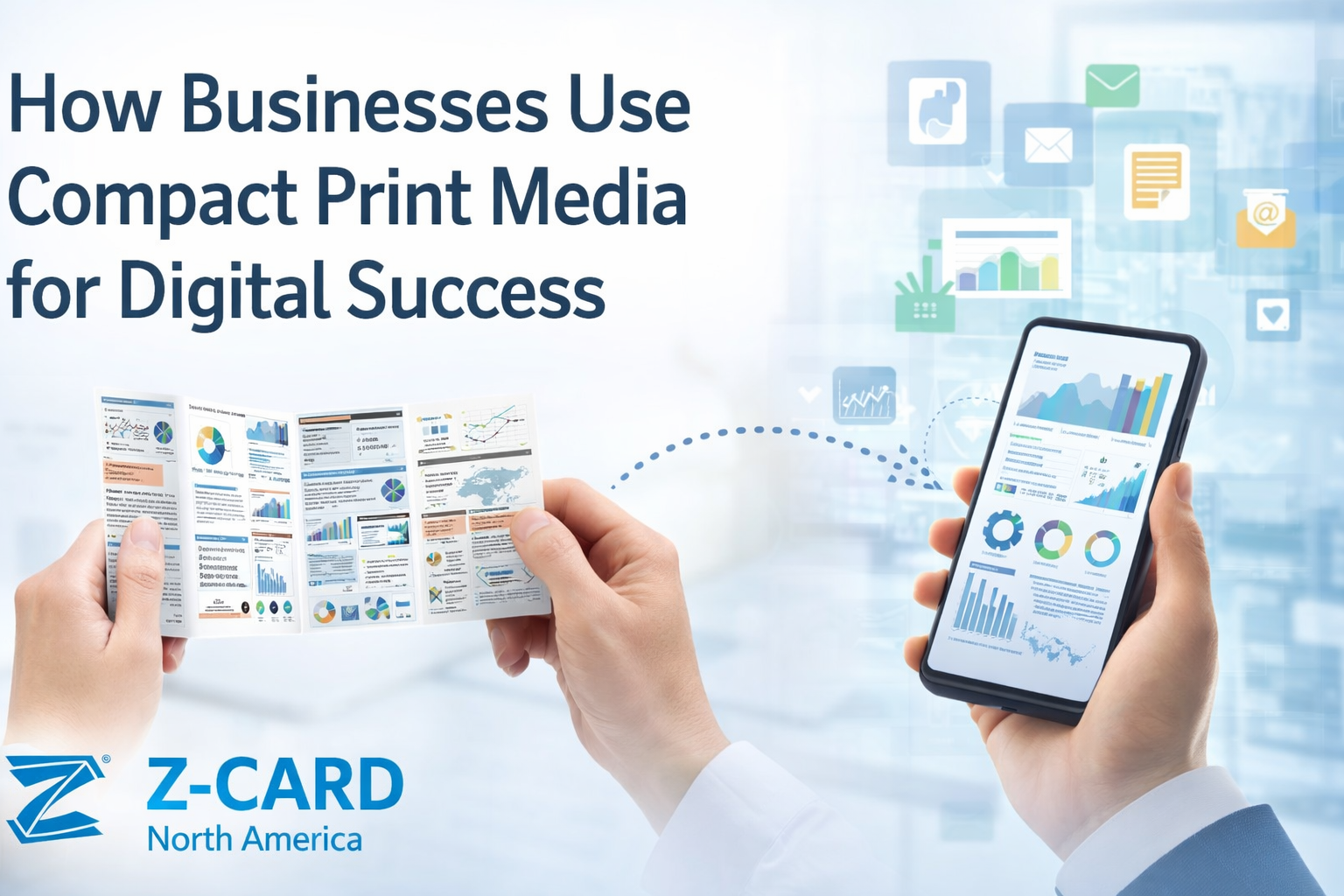
Summary: Compact print media bridges physical and digital marketing in a powerful way. Tools like Z-fold brochure and trifold brochure printing help brands deliver concise information while driving online engagement. This blog explains how businesses use portable formats to improve visibility, boost interaction, and create meaningful customer journeys that connect print with digital platforms effectively.
The businesses are demanding marketing formats that can provide clarity, portability, and quantifiable interaction. Compact print media achieves these expectations through the integration of the structured design and digital integration. Z-fold brochures help in layered storytelling, and trifold printing brochures have neat content flow. These formats can assist brands in providing direction to users between the physical and the digital interaction and the digital action with precision and intent.
Understanding Compact Print Media in Marketing
Compact print media are small, structured, and portable media that are used to present high-value information. Such formats are foldable brochures, pocket guides, and mini catalogs. They are used by businesses to show elaborate content without bombarding the reader.
A print piece should be more than an informative piece. It focuses attention, generates curiosity, and spurs exploration. Combined with the digital aspect (QR codes or short links), print is used as a gateway, as opposed to standalone medium.
Brands that work well with small formats are often concerned with clarity and usability as well as accessibility. These tenets guarantee that users will not abandon the content.
Why Compact Print Media Enhances Digital Marketing?
Digital marketing requires exposure and interaction. Both of them are reinforced through compact print media as a way of providing the means of accessing online elements offline.
First, it draws attention in the physical areas where digital advertisements might not be able to do so. Direct mail campaigns, events, and retail settings prefer tangible materials.
Second, it builds trust. The printed materials are believable and organized. Users tend to have confidence in the source, and thus they are more willing to browse related online platforms.
Third, it eases the provision of information. The short format makes users internalize the important messages fast, and this is a greater chance of interacting through digital form.
Creating Seamless Print to Digital Journeys
Good print strategy does not begin with design. It integrates customers with the online platforms in an easy and convenient manner.
Use Clear Calls to Action
Any print work must have a purpose. The message should bring the reader to the point, whether it is visits to a website, app downloads, or event registrations.
Integrate Scannable Technology
Transitions are easy with the help of QR codes, NFC tags, and short URLs. Users scan or tap and slide straight to a digital world without resistance.
Align Messaging Across Channels
Consistency matters. The digital landing page should be similar to the message in print. This consistency makes trust building and provides a consistent experience. Companies investing in such aspects build a journey and not a series of contact points.
Design Strategies That Improve Engagement
Design is an extremely important factor in the way people are handled when using compact print media. They are readable and memorable with the use of structured layouts and visual hierarchy.
A Z-fold brochure enables the businesses to divide the material into parts that make logical sense when unfolded. The form keeps the users active since they are able to see one panel at a time. It also facilitates the storytelling process by unveiling information gradually.
Alternatively, trifold brochure printing is useful when it comes to arranging information into categories. All the panels have a specific role, like introduction, details, and call to action. The structure assists the users in navigating the content without orientations.
Whitespace, typography, and color consistency are also aspects of effective design. These components are directions of focus and understanding.
Using Data to Optimize Print Campaigns
Businesses tend to believe that print is not measurably effective. This is not always true when the campaigns are combined with the digital tracking.
Marketers are also able to track engagement by means of unique QR codes and custom URLs. Measures like scan rates, click-through rates, and conversions can be very informative.
At this point, businesses improve future campaigns with this data. They determine which messages work, which designs work, and which channels work.
Print plans supported by data are closely associated with online marketing objectives. They make print dynamic instead of being a fixed asset.
Applications Across Industries
Small print media is useful in a broad industry. It is also flexible and thus applicable in varied communication requirements.
Retail and E-commerce
The retail brands employ small brochures to display products and guide customers to the web shops. Formatted content encourages web surfing and fosters online buying.
Hospitality and Tourism
Travel agencies and hotels offer pocket guides that contain maps, suggestions, and links to booking. These manuals improve the experience of the guests and motivate online bookings.
Education and Training
The institutions issue informational brochures containing course information and links to enrolling. A determinate design assists student to make decisions wisely.
Healthcare and Public Services
The companies exchange the important data in pocketable forms. The digital integration guarantees rapid access to the updated resources.
The possibility to merge the highly detailed information with the digital accessibility is beneficial in each industry.
Strengthening Brand Recall Through Tangibility
Digital content tends to have competition in terms of attention. There is another type of engagement created by physical materials. They are used in a preoccupied way by the users.
Small print media can be read without the use of equipment. This availability adds to the time of exposure and better recall.
This can be improved with the help of a well-planned Z-fold brochure that can provide a feel experience. Users expand the sections, browse the content, and even become more immersed in the message.
Recalling increases when the users relate this experience to a brand. This relationship aids in the long-term marketing objectives.
Conclusion
Compact print media continues to play a vital role in marketing strategies that seek both reach and engagement. Formats such as Z fold brochure and trifold brochure printing help businesses connect physical interaction with digital action. They create structured, memorable, and measurable experiences.
Brands that invest in thoughtful design, clear messaging, and digital integration position themselves for stronger engagement and better results. If you plan to enhance your marketing strategy, exploring compact print solutions with Z CARD could deliver meaningful impact.
Turn every interaction into a lasting impression with smart, compact print solutions. Partner with Z CARD to connect your physical marketing seamlessly with digital experiences. Start creating impactful customer journeys with Z CARD today.
FAQs
1. How does compact print media support digital marketing goals?
Compact print media directs users to digital platforms through QR codes, links, and clear calls to action. It enhances interaction and boosts sales rates.
2. Why are foldable brochures effective to communicate with?
Foldable brochures divide the information into segments, something that enhances readability and ensures that the users are engaged until the end.
3. How do businesses track performance of print campaigns?
Queuing codes and URLs are unique codes used by businesses to track interactions with the users, which deliver quantifiable information concerning the effectiveness of the campaign.
4. Which industries benefit the most from compact print media?
Retail, hospitality, education, and healthcare industries can gain a lot, as they require the presence of transparent and available communication.
5. What should businesses focus on when designing print materials?
Businesses need to focus on clarity, structure, visual hierarchy, and seamless integration with digital platforms for better results.